

The Energy and Petroleum Regulatory Authority (EPRA) announced new maximum retail prices this week

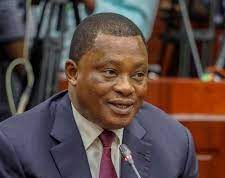
Cabinet Secretary for Energy and Petroleum, Opiyo Wandayi speaking at Orenge Secondary School in Sidho, Kisumu County on June 28, 2025.
Kenya fuel prices July 2025 have risen sharply, putting pressure on motorists and households. The Energy and Petroleum Regulatory Authority (EPRA) released new maximum retail prices this week. Super Petrol, Diesel, and Kerosene all recorded significant hikes for the pricing period from July 15 to August 14, 2025.
In Nairobi, Super Petrol now costs Ksh 186.31 per litre. Diesel follows at Ksh 171.58, while Kerosene retails at Ksh 156.58. These changes represent an average increase of around Ksh 9 per litre. As a result, fuel costs have reached their highest levels in recent months. Public debate has reignited over the sustainability of government intervention in the energy sector.
For years, the government used a fuel subsidy to stabilize prices and protect consumers. This subsidy was mainly financed through the Petroleum Development Levy Fund. However, the Treasury recently confirmed the subsidy funds are depleted. Without them, Kenyans now bear the full impact of global oil price fluctuations and domestic taxation.
The drying well of subsidies
For years, the Kenyan government occasionally used a fuel subsidy to cushion citizens from global oil price shocks. This subsidy drew funding from the Petroleum Development Levy Fund. However, the Treasury has now confirmed that the funds are exhausted. Consequently, consumers must now deal with full exposure to international price shifts and domestic taxes.
Previous administrations, particularly under President Uhuru Kenyatta, relied heavily on these subsidies to manage living costs. When President William Ruto took office, he removed most of the support. He argued that subsidies were unsustainable and encouraged abuse, including artificial fuel shortages. Although his government briefly reinstated targeted subsidies on diesel and kerosene, the current move signals a complete withdrawal of price support.
Factors driving the surge
EPRA attributes the latest fuel price hikes to a rise in the average landed cost of petroleum products between May and June 2025. During that period, Super Petrol costs increased by 6.45%, Diesel by 6.27%, and Kerosene by 6.95%.
While appearing before the National Assembly Energy Committee, Energy Cabinet Secretary Opiyo Wandayi defended the government’s stance. He said Kenya’s heavy taxation, not the government-to-government (G-to-G) fuel import deal, drives the high pump prices. According to him, taxes and levies account for nearly 45% of petrol’s retail price in Nairobi—about Ksh 82.33 out of Ksh 186.31.
Furthermore, Wandayi pointed out that neighboring countries impose lower taxes on fuel. “That’s their choice and the wisdom of their parliaments,” he stated. He emphasized that Kenya’s system includes ad valorem taxes, which increase when global prices rise, and fixed charges like the Road Maintenance Levy.
However, several lawmakers pushed back on this explanation. MPs Tom Odege (Nyatike) and Julius Mawathe (Embakasi South) questioned whether Parliament is solely responsible for these high fuel prices. Their comments reflect growing concern within the House over the burden placed on ordinary Kenyans.
Ripple effect on the economy
The complete removal of fuel subsidies and the resulting price hikes are expected to ripple through Kenya’s economy. Transport costs will likely increase, raising the prices of food and essential goods. This trend adds more pressure on households already battling high living expenses and stagnant wages.
In addition, economists warn that prolonged high fuel prices could trigger inflation and slow down economic growth. Without effective policy responses, the situation might lead to increased public frustration. The government must now strike a delicate balance between fiscal responsibility and protecting its citizens from global economic shocks.
As citizens face the immediate consequences of these changes, questions remain about Kenya’s long-term fuel pricing strategy. The Ruto administration has already assured the International Monetary Fund (IMF) that it won’t reinstate broad fossil fuel subsidies. Therefore, Kenya fuel prices July 2025 may mark the beginning of a more permanent shift toward market-driven pricing.